Showing posts with label Poetry. Show all posts

Sunday, 8 December 2024

Looking at writers - does he ever stop smoking?

Today, I am writing a eulogy for someone very close to me. Like most people, I’ve put things off. For example,  I’ve been tempted to search the history of using ‘a’ instead of ‘an’ when forming the phrase ‘a eulogy’. I won’t bore you with the details. And, of course, writing this blog is another way for me to put off the inevitable. Anyway, a eulogy is about creating a sense of a person and what they mean to you. 


This sense of a person is something I feel we have lost within English. I’ve been part of lots of discussions around how English should change and what’s the problem with its current form, but I’d argue that our sense of humanity and our sense of humans has been lost. Texts have become collections of techniques to find and catalogue. Texts have become things to highlight and pick out things. Texts have become these things that float in nebulous space that have no relevance or currency in the real world. 


Texts in the English classroom cannot escape being picked apart and overly scrutinised. It isn’t the obsession with knowledge that is at the root of the problem. It is this default method that everything we do in English has to be linked or connected to the spotting of something. How many lessons go by without there being a highlight or comment on a technique used? We’ve got to the point where we are our own worst enemy. We only feel comfortable if students are talking about techniques. 


The writer has become a forgotten entity. 


Instead of reading texts to discuss a writer’s ideas, we are seeing things through the prism of techniques. And, to be honest, that is such a narrow view. It strips the person away from the discussion. We are thinking about things rather than people. 


How many times do we show pictures of writers? In fact, how often do students see images of the writer? For most of the time, we don’t show a picture of the writer. We want students to make inferences, assumptions, opinions about the writer about the text, yet we don’t actively show writers. We don’t actively help students co-construct a view of the writer. A person that thinks and feels something. 


For the past year, I have actively made students actively construct a writer in their head. And, the key way to do that is to constantly remind students visually of the writer. Instead of making the writer this shadowing figure that they have to construct like a séance and the techniques are a form of a Ouija board, we’ve put photos against every text. They can see who wrote it and that seeing the writer is important. 


Here is one such poem I recently discussed in lessons. 


The Dunce 


He says no with the head
but he says yes with the heart
he says yes to what he loves
he says no to the teacher
He's standing
we are questioning him
and all the problems are posed
suddenly he felt a crazy laugh come over him
and he erases the whole thing
the numbers and the words
dates and names
The sentences and the traps
and despite the master's threats
under the boos of child prodigies
with chalks of all colors
on the blackboard of misfortune
it draws the face of happiness.


Jacques Prévert
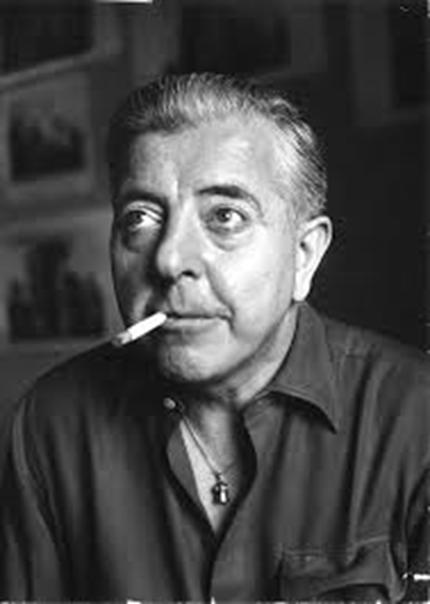


Interestingly, Prévert is never photographed without a cigarette in his mouth. For me, that just typifies the rule breaker he is. 


Once we started introducing photographs alongside writing we saw other interesting things. The building up of an interpretation of the writer. But, also, a personal dimension to the discussion. He must think … He feels … It is interesting that a long time ago one strategy we used was a ‘character on the wall’. On a big sheet, we’d have an outline of a body and we’d write bits about the character as we read a text. It seems a shame that we never did that for writers. Because, by the end of the text, a student should know what a writer thinks or feels about something, yet often they don’t. We’ve placed the emphasis on the character, the plot and the themes. Dickens bludgeons you over the head with ideas. Shakespeare is a bit more subtle. Our obsession with the text means that we work on the students’ understanding of the text and not the students’ understanding of the writer through the text. Just look at how students think in terms of texts and not in terms of writers. That speaks volumes. The text dominates. The writer is hidden. Students will talk about Macbeth and Charge of the Light Brigade,  but they don’t talk about Armitage or Weir. In fact, they barely recall the writer’s names at times. 


One of my favourite activities to build on this is to look at this poem about Rosa Parks. 


Rosa 


How she sat there, 

the time right inside a place 

so wrong it was ready. 


That trim name with 

its dream of a bench 

to rest on. Her sensible coat. 


Doing nothing was the doing: 

the clean flame of her gaze 

carved by a camera flash. 


How she stood up 

when they bent down to retrieve 

her purse. That courtesy. 


Rita Dove 



After reading the poem, I ask students to discuss these things: 


What does Rita Dove think of...


...what happened? 


...how Rosa was treated? 


...the people moving Rosa? 


… the other people on the bus? 


And, then, I flip it with these questions: 


What does Rita Dove feel about ...


...what happened? 


...how Rosa was treated? 


...the people moving Rosa? 


… the other people on the bus?


Students naturally talk about devices and words around the poem, but first and foremost they are talking about the writer. Making inferences about what they think and feel. From the beginning they explore the poem through the writer. The writer is a clear and strong presence. And, not some random faceless unknown. We are getting students to construct an interpretation from the beginning and not as an afterthought or as something that has to be taught as knowledge. 


Every day students are making inferences about the people around them. Their friends. Their teachers. Their parents. We are constantly thinking about what the other person feels or thinks. That’s what English is partly about: understanding people, situations and events. If we don’t work hard to make the subject about people, then it won’t be a subject for people. 


Thank you for reading. I have digressed enough, but you’ll probably be able to make some inferences from reading this about me as a person. 


Xris 


Sunday, 18 September 2022

Poetry: Thanks for the Annotations

Annotating things in English is the equivalent of breathing. We do it all the time and it is almost second nature to what we do when teaching. It even bites us on the bum when the copy of a short story we want to use again and again with classes is stribbled with annotations because a student thought that was what we’d be doing.


Annotations on a text are not a good proxy for learning. I can tell you of loads of examples of students who had brilliantly annotated copies of the texts, but that didn’t translate into grades. Equally, I have seen students with slim annotations exceeding my expectations. Just because a student has a page full of scribbles, it doesn’t mean they know or understand the poem. Annotation gives us false security and hope. Phew, I have done my job because I have evidence of it. Nobody can criticise my teaching, because look - it is all there for you to see it.  


Overteaching is something we need to be mindful about with English teaching. The beauty of English Literature is you can study a novel over a term or for months. Yet, we often have a worry of letting go of texts. I just need another week with the poem and then I will be satisfied that they have learnt it well. Poetry is the one area where I think there’s a lot of overteaching of the poems. Why spend two lessons looking at the poem when you can spend two weeks on it and ensure they really know the poem. 


When you look at any GCSE or A Level essay, the amount of techniques and terminology needed to form a strong essay is quite small, yet when teaching we ensure that students are aware of every technique or device employed by the writer. The cognitive load for each poem, then, is phenomenal. Students focus on learning the techniques rather than focus on ideas and meaning behind the poem. That is why students continuously write and crowbar techniques into their essays. Not because of a weakness on their part, but because when teaching a poem we have placed emphasis on this knowledge. Yes, we might have done some lovely stuff about context and intent, but that space in their brains is eaten up by the knowledge of seven similes and something interesting about the volta. 


The problem is poetry. Now before you start throwing poems at me. Hear me out. A poem is a dense piece of writing. Like a fine piece of art, you can look at a small aspect and spend ages exploring how it relates to the rest. When looking at art, you don’t pick up on every brushstroke. You spot interestings things and explore them further. Yet, for poetry, we obsess about every brushstroke. In fact, annotating is ‘brushstroke thinking’. It isn’t meaningful exploration, but an obsession of the components rather than the ideas. When we are asking students to explore the idea of glory in war, they can tell me about some techniques, but they can’t tell me why and what the poet is saying. Without the key idea of the poem, techniques are just brushstrokes. They don’t relate to the whole. Or what’s hidden behind. 


I think we have to be realistic about what we want students to learn from and about a poem. If we want students to learn the fifteen named poems in the anthology, then we need to think about it in a clever way and think about the cognitive overload. The mental entropy of knowledge happens so quickly with poetry. How many times have we heard - ‘which poem was that one, again’’?  Newsflash, I have to remind myself of the fifteen poems before I teach them and I have taught them for years. Why do we think a student can retain those fifteen techniques you highlighted in the first stanza in Term 1 of Year 10 at the end of Year 11? What is the benefit over annotating every line and stanza when they only need four or five techniques to form a strong discussion? 


Over the years, I have withdrawn from annotating poems heavily and focused on a few key devices in the poems. Enough to form ideas but not too many to drown their own thinking, which is a tough one to gauge. Instead, I have worked on developing key ideas and explanations of the writer’s choices. I’d rather have a student explain why a poem uses repetition effectively than seven techniques spotted and not explained. 


Explanation of devices is what students need more knowledge of and that’s what I have been doing recently. With each poem, I pick one device to explore the reason for using said device alongside some examples from the poem. Therefore, the knowledge worked on is beneficial to more than one text and I am not spending two weeks on knowledge that might or might not be used once in a 45 minute essay in the final exam. We are working on knowledge that connects to other texts.  


Effect is something we, as teachers, need to put higher in the student’s minds and in our teaching, yet it is largely overly simplified or rushed. That’s why I have created a few PowerPoints around the choice of certain literary devices. I am using them with a poem, when teaching, but when we, later, spot the device used in another text I will have the slide to hand, reminding them of the reasons behind a writer using a device with a timely reminder of where else they have seen the device before. I’d rather have a student see that Dickens, Shakespeare and Tennyson use repetition, but with differing effects, so that, when faced with repetition in other texts, they have that bank of knowledge to recall rather than disparate bits of knowledge. 


All the talk about knowledge has meant that we have largely focused on the what and not the how. How are we going to support and build knowledge in English? For a start, rethink how we annotate texts. Yes, annotate a poem, but not so you pindown every part of it. After all, nobody is asking students to reconstruct a poem line by line in an exam, so why do we insist on deconstructing a poem line by line.   


Thanks for reading, 


Xris 


P.S. This is a work in progress and I am slowly tweaking and creating as I go along. 


Sunday, 3 October 2021

Diet poetry and the problems with the poetry anthology

 I enjoy teaching poetry but I do find the idea of an anthology of fifteen poems for GCSE such an overwhelming prospect for students. I have been around long enough to seen how the various poetry anthologies are used. Rather than have students engage with poetry and exploring how language is used, we end up, largely, having poetry translation and memorisation of random facts in the hope they can be strung together.

The obsession becomes about ‘knowing the poem’. What ever ‘knowing the poem’ means? Single poems are studied over several lessons until the teacher feels the students know the poem, which usually means the teacher has informed student about everything in the poem. We aren’t happy unless the student has an highlight annotated copy of the poem in their book and twenty spurious facts about the poem, like Duffy has an aversion to the colour red, in their brains.

The cognitive load of the anthology is massive and it is a worrying aspect for us as practitioner. For novels and plays, you have narrative framework which holds knowledge together or at least structures it in some way. Fifteen poems loosely linked together by a theme lacks this structure and this natural cohesion that plays and novels naturally have. Then, let’s look at the poems themselves. Densely packed texts with a multitude of ideas, messages, themes and techniques. The richness of poetry for some is the cognitive overload for others.

When you marks essays based on the anthologies, you get a clear divide. Those that can remember everything a teacher said about a poem. Those that can form their own opinion on the poems. Those that just repeat parts of the text. Sadly, even after spending weeks looking at the poems, some students are not able to form their own opinions. Part of the beauty of poetry is that anybody should be able to offer an opinion on a poem, spot some interesting things about the poem and offer some reasons about why they think a poet wrote it. Poetry should be the one thing students should be able to do easily without understanding  Shakespeare’s language or without knowing the plot of a 350 paged Victorian novel.  The way the anthologies are taught I’d argue add to the cognitive load of students. We are adding to the load rather than supporting and helping with the load. We have a large number of our students who are overburdened with poetry that when it comes to assessment that freeze-up and write waffle.

We need to look at the process of how we teach these poems. We need to be aware of the cognitive load related to the learning the poems. Students think they need to know everything about the poems. That in itself if problematic but it is something we need hit head on. We need to aim for confidence about a poem and not complete knowledge of the poem. Now, don’t you go thinking this is  knowledge rant; it isn’t. But, I feel that the relationship between knowledge and confidence needs exploring. Knowledge does give you confidence, but confidence in poetry can come from very little knowledge and from the personal knowledge of the student. Ideally, we want confident and knowledgeable students, but at the moment we do have students who lack confidence because the knowledge is overwhelming. They need the knowledge is a way that helps them build their confidence. We need to address the extraneous load so that students get more confident.

So, where is this going? Well, we, like others, had a problem with lockdowns and students isolating. We had studied several of the poems during lockdown, but when it came to revisiting them the students struggled to recall or discuss the poems they had previously studied with confidence. Therefore, we needed to revisit the poems in a way that ensured knowledge retention and confidence, so I did something a bit controversial. For this, I know I am going to visited by the ghosts of Blake, Plath and Tennyson begging me to change my ways. Bah, humbug! I presented a diet version of the poems in the anthology. This is how we started ‘War Photographer’.


In his darkroom he is finally alone

With spools of suffering set out in ordered rows.


Home again

To ordinary pain which simple weather can dispel,

To fields which don’t explode beneath the feet

Of running children in a nightmare heat.


He remembers the cries

Of this man’s wife, how he sought approval

Without words to do what someone must


From the aeroplane he stares impassively at where

He earns his living and they do not care. 


Students copied the diet version in their books and then together we explored the meaning behind the poem. Students spotted patterns in the language and together we explored their ideas about the poem and the poet’s message. The great thing was that students felt they knew the poem and they readily offered ideas about the meaning of lines and phrases. All annotated on their handwritten copy of the poem. The beauty of writing is down was that spotted things in the writing which are largely hidden from sight unless you write things down. Word order. Structure.

But, you’ve taken some of the best bits of the poem out? Yes. I had. On purpose. The problem often with poetry – and the beauty of it – is that you have lots of images that add to the overall mood and tone, but detract from the overall meaning. We get it, because we are attuned to dealing with a collection of images, yet students don’t. They overload the student. Why is it a Mass in a dark room? The concept of the darkroom isn’t clear in the student’s head when another image is thrown into the mix. That’s why a lot of poetry teaching is working through the poem line by line. Decluttering.

We hadn’t even read the whole poem yet students had a confident grasp of what the poem was about, the choices made relating to language and structure and some understanding of the poet’s message. Confidently, they could talk about the poem. We did this repeatedly with five of the other poems and their confidence increased. They had a grounded understanding of the poem which was a mixture of exploration and discussion, rather than us go line by line through the poem.

Then, when we looked at the poem, we were able to look at how other components worked.

The only light is red and softly glows,
as though this were a church and he
a priest preparing to intone a Mass.


This next bit became incredibly fruitful in terms of discussion. We were able to look at what this sentence added to the meaning of the poem. What was the effect now of comparing it to a church and a Mass? How did the mood change? Why at this point? We did this repeatedly with the poem. Seeing how each element missing from the diet version slots in. Building their knowledge when they were confident to start with at the beginning.

All too often we look at the whole and zoom in on a word or a line, but this changed things for us. We were looking at the cohesion between parts of the poem. How things fitted together? Exploring the reasons and the ideas. Bringing new elements to the poem helped increase their knowledge of the poem, but with a real sense of confidence. We could even throw Yygotsky in there and say that I was working on the concrete and building up to the abstract elements.

Confidence in talking about poetry is something we need to actively work on. Yes, there’s a lot of poems to get through and so little time, but if we can get students more confident about talking about a poem in their first lesson with the poem, then that will only add to their confidence when they write about the poems later down the line. All it too was a little unburdening of the cognitive load when faced with the poem for the first time.

Thanks for reading,

Xris

Sunday, 11 April 2021

The first read is the deepest – moving away from spotting and pushing the thinking

 We are currently working with our Year 11s to help them prepare for an assessment on unseen poetry and for me it has, yet again, made me think about how we teach poetry or texts of any kind.

When we first introduce a text to a class, we often don’t let them sniff the wine. We don’t let them experience the bouquet. The aromas. The experience. The flavours. The hints. Instead we attack it. It is red wine. It is from France. It is a Shiraz. There’s much more to the things we enjoy. There is beauty in knowledge, but there is beauty in the experience. That chocolate egg you devoured slowly in front of the telly happened because you enjoyed the experience. It isn’t because you liked the pattern on the egg. It was the experience that gave you pleasure.

I don’t think we put the pleasure in texts enough in lessons. Now, I don’t want to come across as some Children TV presenter and suggest we make everything fun: no, I mean we put pleasure in the driving seat for once and we put what the text does to a person first. All too often, techniques are in the driving seat and lead things in lessons. That’s why Tim can spot seventeen examples of alliteration yet can’t tell you a single thing about what the poet is saying about a beach. Tim, what is the poem saying about the beach? ‘It is saying that alliteration is a really effective way to describe a beach, sir.’

When I read, I enjoy the experience. And, contrary to popular belief, I am not analysing as a I read. I am not. Instead, I am relishing the flavours, the bouquet, the hints, the aromas. I might even like it much that I want me more of it.

Okay, Xris. Cut to the chase. What does this actually mean in the classroom? Well, first of all, it does not mean you have to put a cravat on and start lighting scented candles to create the right ambience to ensure feelings happen. It means putting the impact on the reader at the front of discussions and analysis. Instead of making it an after thought. We’ve all stood there when we’ve asked a student about the effect something has in the poem. They look at you blankly as they search their internal memory cabinet so they can bluff their way through. Ummm – make the reader want to read on.  

To be honest, I have been conditioned to focus on analysis first and then explore the impact. I am not saying that analysis is bad, but I think how we structure the analysis in a lesson is problematic. What came first: the chicken or the egg? In English lessons, what comes first: the impact or the technique? For students, and most readers, it is the impact and not the technique. For English teachers, it is largely the technique and not the impact. This structure is problematic. I hate alliteration for this thing alone. How blooming hard is it to explain the effect of alliteration after you have spotted it? Pretty hard. That’s why students tend to default to an explanation of alliteration. It is much easier after you have spotted the effect to attach the mood to alliteration and a number of different techniques.

That links to another issue we have with this internalised structure of poetry teaching. Writers don’t use one thing to create a particular effect. A poet will use several methods to convey a mood. Yet, when isolating methods and linking to the impact, students miss out the connections and the interconnectivity of things in a poem. Moods are spider webs in poems. They have delicate silken threads to a number of things. Seeing those webs are what good students do. They gentle lift a thread and see all the different ways it is attached to things.

Therefore, we need to put impact in a higher position in the English lesson. Yes, there will be time for analysis and ensuring comprehension, but let’s not neglect our first reaction to any text. The feelings. The thoughts. The connections. The recollections. The questions.  

 As we work through unseen poetry, I start each lesson with me reading the poem and then they underline the bits they like. Yes, a simple question: what bits do you like in the poem?

Here’s a poem we have recently looked at:

Hard Frost


Frost called to the water Halt 
And crusted the moist snow with sparkling salt;
Brooks, their one bridges, stop, 
And icicles in long stalactites drop. 
And tench in water-holes 
Lurk under gluey glass like fish in bowls. 

In the hard-rutted lane 
At every footstep breaks a brittle pane, 
And tinkling trees ice-bound, 
Changed into weeping willows, sweep the ground
Dead boughs take root in ponds 
And ferns on windows shoot their ghostly fronds. 

But vainly the fierce frost 
Interns poor fish, ranks trees in an armed host, 
Hangs daggers from house-eaves 
And on the windows ferny ambush weaves; 
In the long war grown warmer 
The sun will strike him dead and strip his armour.


                                                                                                     Andrew John Young


It is interesting to see what students like. I get students to tell me what they like and we annotate a copy of the poem together with those bits. If students are confident enough, they might explain why they like it. I have highlighted on the poem some things students have liked. Unanimously, they all liked the last line. The fact that it was the last line straightaway addresses a structural point. We offered ideas why we all liked it. Some suggested it was the pace. Others suggested it was the fact that it was the sun appearing and how we prefer the sun to the frost. We then analysed the poem in more depth.  Students had a grounded understanding of the personal impact the poem had on them.  They knew how they felt and their reaction to the text at certain points. They pick up on the sounds, effects, patterns and structural things without going near a darn technique. The first reading is always the deepest!

For over a year, I have been really interesting in how we teach impact and effect in texts in the English classroom. For years, I have always been a big believer of teaching effect first in writing (Sexy Sprouts), but more so now am I seeing its relevance to literature. It boosts confidence in students and it enables discussion in lessons far more than narrow questions on techniques or big questions about life. Everybody can tell you whether they like or dislike something. In fact, that is where passion stems a lot of the time. Take Marmite. People can tell me with passion or aggression why they like or dislike Marmite. Why don’t we channel this ability to be passionate with texts we study?


Here are some approaches to being more focused on effect / impact in lessons.

[1] Getting students to ground their understanding with a connection to their personal world

What does this remind you of?

What does this make you think about?

[2] Getting students to identify themselves in the text

Whose side am I on?

Who represents me in the text?

Where are you in this situation?

Who is the victim? Who is the villain?

[3] Getting students explore things in terms of positive and negative

Students identify whether the text is positive or negative. Then explore why it is negative or positive. Often texts present different parties in the text differently. They might present a boat positively and the sea negatively. Looking at the relationship between positive and negative elements is really meaningful.

[4] Getting students to how positive or negative something becomes

This is particularly important for AQA Paper 1. Often, the texts start negatively and get even more negative as the text goes on. We look at how the negative effect is amplified through the text. What structural choices add to this negativity?

[5] Getting students to explore what the like and dislike about characters

It’s easy to see texts with a pantomime googles: people are either victims or villains. Seeing that characters have relatable aspects is really key. Students might not like Mrs Birling but they could at least identify with her determination to do what is right for her family. Seeing characters are complex things are relatable is important.

[6] Getting students to articulate their first impression, reaction or feelings

What do you like?

What don’t you like?

What is your opinion of…?

What would you do if it was you?


We all like shared experiences. How many of us chat about shared experiences of books, films or TV? Every text we study is a ‘Line of Duty’ watercooler moment. It is a shared experience and not just shared analysis. The two go hand in hand. One is made even better by the other. We enjoy the experience so we analyse it more.   

Let’s help students feel and experience the brilliant literature we study and not just know them. It doesn’t take a lot to do this. No fancy costumes. No special effects. No props. No special guest.

Get your nose in a poem. Swirl it around. Savour it. Spit it out. What do you notice?  

Thanks for reading. I am now off to get myself drunk on poetry. Hiccup. Hiccup.

Xris

Sunday, 16 June 2019

Teaching poetry at KS3 – why we need more chat in the classroom.


 When did written assessments become the sole way to mark a student’s understanding of a text, idea or concept? The sad thing is that in an attempt to develop students and praise the God of Progress, we have ditched some useful, handy, and relatively easy, ways to judge an assessment. Instead of getting students to explore texts in depth we are stuck on a pretty limited way of analysis.
Three years ago we ditched all written analysis of poetry at KS3. When students were writing essays about Shakespeare and essays about novels, it becomes tedious when you add another essay or essay style writing. We stopped completely. We, well I, felt that all we were doing was repeating the assessing stage and not repeating the idea forming stage. We were obsessed on the marking rather than the thinking. Were we getting students to think of interesting ideas in the poem? No, we were rewarding those interesting ideas in writing, but were we working heavily students learning the ideas and not necessarily coming up with their own interpretations.
There was another important reason for ditching a written assessment on poetry was the workload problem. At different points in the academic year we have Year 7, 8 and 9 not having a written assessment for a term. This alleviates the pressure points of mock marking. The time when teachers mark mocks is a real pressure point, because suddenly a normal workload is increased by 100%. You’ve not just got a pile of work to mark for each class, but now added to that, because it is the educational equivalent of the Easter Bunny leaving a brown treat, you are left with not just one piece of work to mark but the work like bunnies has replicated themselves several times. So, you are left with four essays per student, because it is ‘fun-time mock season’. That’s why we place the spoken assessments at this point. The last thing you want hanging over your heads is another set of marking, when you have thirty Year 7 essays hanging over your head.
So, how do we use poetry? We have an anthology of poems selected from various times, poets and styles and we link them thematically. Then, we work through the poems one at a time. At the end, we get students to compare two poems and make an interesting comparison. Usually, the talk will comprise of the student selecting two lines from the poems and exploring their ideas and their observations. Finally, we assess the talk for performance (pass / merit / distinction) and then for quality of ideas. We have two levels of assessment. The key thing for us is getting students to talk about poems and explore. And, if I am honest this unit involves lots of annotating and lots of talking. Talking is good. Talking is great. Talking is easy. We talk about relationships in Year 7. We talk about voices in Year 8. We talk about setting in Year 9.
For me, the emphasis on raising the quality of discussion is far more productive than the identikit written analysis we were doing before and I talking too of the awful APP units too. We talk before we write. And boy isn’t that the problem with KS3. We write before we talk. ‘Write down your idea before we share it,’ is a phrase often said. Our emphasis is on the written communication. The forming of sentences. The capturing of thoughts on a page. How many teachers fear having a blank page in exercise books at the end of the lesson? 
Ideas need space to form, develop and grown and that happens verbally. One of the things I often say to students is the need to talk in English. Argue. Chat. Disagree. Question. Challenge. Persuade. If a student can talk about something, they can sure as hell write about it. I love being challenged. I had a lengthy debate with one student over the colour of the lighting in An Inspector Calls. He was challenging me and I loved it. I even went to Twitter to seek support. He apparently did a poll with the students on another social media platform. Some might call it a ‘spark of interest’. Another might call it ‘engagement’. I’d call it the exploration of an idea.    
Boys can cope with challenging and complex texts, but has the process of how we do things had a negative impact?  I was that loud mouthed boy at secondary school. I’d talk about anything and everything. Get me involved in a conversation and I was hooked. Give me something at that age and ask me to write about it and I would struggle. I’d struggle because I hadn’t bounced the idea around in my mouth and in the air around me. I hadn’t heard the sound of ideas and heard that one thing sound better than another thing else I had said.  
Again, the problem is the nasty loathsome GCSEs spoiling everything. Because there is a large unseen element of the exams, we have internalised that exam process in planning ideas for lessons. We give students a task and expect them to treat it like an unseen text. Think of an idea on your own and write it down. We don’t go and get them to talk about it first. This process is repeated endlessly in lessons and classrooms. We know boy’s engagement is an issue, but is that engagement something simple like the use of communication skills? Is it our emphasis on writing that is hindering boys’ ability to communicate? We talk about looking for the quick fixes, but could it be as simple case of us using the writing process as the dominant way in rather than the spoken process. We spend half our time telling boys to be quiet, when maybe that should be the thing that we promote. Talk boys, but make sure it is about what we are focusing on in lessons.
Now, I am not advocating people get debates and formal discussions in lessons. In fact, far from it. A debate is probably the last thing we need. I do, however, think we need to explore how we use chat and discussion in lessons. How could we use it to engage students with the ideas, content and texts? Are we turning everything into writing? Do we want English to be the subject that is solely known for writing? Wouldn’t it be better if English was the subject where students felt they thought about things?
Right, here is one such thing I did with some poetry. I revealed the poem ‘Stealing’ by Carol Ann Duffy one line at a time. I then gave students this grid. 

Deeper meaning

·         I think the poem is really saying…
·         For me, the poem is teaching us…
·         On the surface the poem is about … but under the surface it is about…  


Comparing to the other poems

·         This poem is a bit like …because… 
·         The poem is the opposite of … because ..
·         I think this poem shows an alternative perspective to …
·         This poem focuses more on … than

Pick on a word and explore

·         The word ‘…’makes me imagine…
·         The word ‘…’ makes me think of …
·         The word ‘...’ reminds me of...
·         The word ‘…’ make me feel …

Feelings

·         To make us feel _________, the writer shows us…
·         To make us feel _________, the writer uses the image of …
·         To make us feel _________, the writer uses the combination of …. and …


Symbols

·         The writer uses …. to be a symbol of...
·         …. is usually a symbol of … but here it is used as a symbol of…
·         … is symbolic of the relationship between … and …

Connections between aspects in the text

·         The use of … and … makes us…
·         There is a pattern of … across the text…
·         The writer seems to be repeating…

An alternative way of looking at things

·         Another way to look it is …
·         It could also suggest…
·         Someone else might think that…


Developing / Increasing / Decreasing

·         As the poem develops, the …. increases because …. 
·         There’s a marked decrease in … as the poem progresses
·         I notice that … develops in the poem
Changes

·         The mood changes when…
·         The writer changes the tone of the voice when...
·         The turning point in the pome is when…
Students had to share ideas and explore the poem using the sentence openings. Each time they shared one with the class they ticked it off. I didn’t get through the poem. In fact, I only made it to the second stanza with them. The discussion was relentless. I had boys exploring how the snowman might be a metaphor for a man dehumanising a body after killing a person. Another, kept seeing patterns in the words. Another spotted subtle changes in the tone. We, together, explored the choice of taking the head first, exploring the fear of eyes looking at the stealer / murderer.
Did all the boys contribute? No. Did all the girls contribute? No. The majority did. A few didn’t. And that’s simply because not everybody is the same. These students, and I know them to, would prefer to write their ideas down rather than share them with the class. Some of these students like to absorb the ideas and then come to their own idea as result of hearing the others talk. Next lesson, we’ll see what they come up with.
There is no one model that fits and suits all students, but do we have a model for teaching that hinders a part of the school population. Balance is key. Maybe the balance has been shifted too far one way. If I asked those students to write about the poem, they’d do so with aplomb. That process is needed to help them get to a point of independence. KS3 isn’t the wasted years. It is the idea forming years. We need it to be a time for forming ideas. And that starts with talk.

In the beginning, I learnt to talk and I did that before I started to learn to write. Before all writing, there comes talk.

Thanks for reading,

Xris