‘When I was a child, I talked like a child, I thought like a child, I reasoned like a child. When I became a man, I put the ways of childhood behind me.’
Fiction is the domain of childhood, freedom and creativity. From an early age, we engage with stories. In fact, our childhood is one big storytelling event. There is story time every day. There is a bedtime story. There are stories, thanks to Disney and Pixar, that can be consumed in 90 minutes, allowing parents a break.
Non-fiction is the domain of adulthood, responsibility, duty and compliance. The older we get the more we discover that our reading comprises reading for information and process rather than enjoyment. There is the mortgage application I have to read. There are the terms and conditions I have to read about the new washing machine I have bought. There is a letter from the council about how they are spending my council tax payment I have to read.
If we are honest, schools have a real issue with non-fiction teaching. You can just see the yawns on people’s faces when dealing with non-fiction. Can’t I teach a poem? I think some teachers would be happy to spend a week on Alcatraz than prepare students for the non-fiction paper on the exams. On previous exam specs, there was a media element so the non-fiction reading text element was downplayed as teachers explored the use of imagery, headings and subheadings.
The problem, for me, is to do with inference. We don’t see non-fiction in the same way we see fiction and that’s down to inference. From an early age, we build students to search for inferences in fiction texts. Why is the baby bear sad? Why is Goldilocks so tired? Why are Goldilock’s parents so neglectful? We channel students into this submissive role of fiction. You know this bit here; well, it means something else. By the time students leave primary school, they know how facial actions, physical actions, objects and setting can convey a level of meaning. They can help us understand a character’s thoughts, feelings, motives, relationships,dreams and fears. Can the same be said for non-fiction? What can students do with non-fiction?

In secondary school, we had a problem with non-fiction. The preference has always been about writing it rather than reading it, so rarely has it been about exploring texts. Usually, the reading of texts has been boiled down to finding facts and opinions or treating them as literary texts and searching for techniques. We’ve never really treated them with the same level of engagement as we do fiction texts. Even the non-fiction texts selected have a whiff of literature about them and most would fit in an Ian McEwan novel. The texts usually highlight how clever the writer is.
Inference is a factor, I think ,that is missing from non-fiction. We don’t use inference to explore non-fiction texts. In fact, there is a lack of understanding behind non-fiction texts. They are purely seen in literal terms. They are not seen in terms of subtext, nuance and hidden meaning. Instead, they are read through literal glasses. Find fact 1. Good. Now, find fact 2.
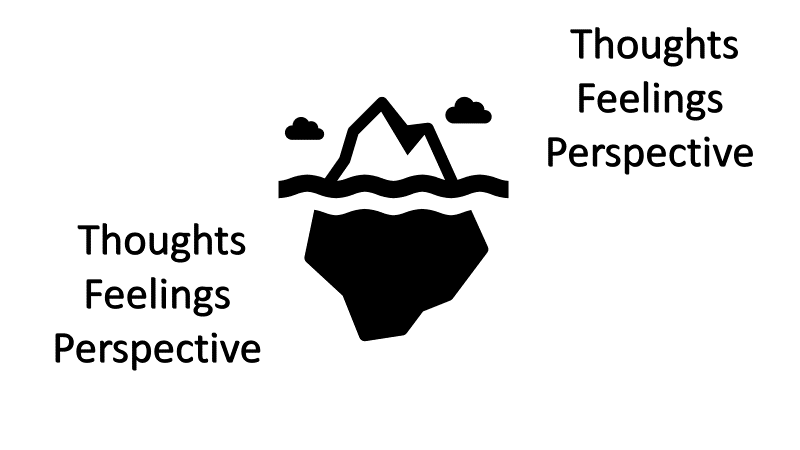
The problem with non-fiction is like real life. A person can say one thing and mean something entirely different. That dual meaning in non-fiction is what some of the best students pick up on and the weaker students totally miss. Students need to make inferences yet we don’t place inference at the forefront of non-fiction.
For years, I have found the way we teach the writing of non-fiction dull, uninspiring and flat. That is largely the way that we view it in terms of ‘literal writing’. We don’t coach it in terms of building meaning with the use of hints, clues and suggestions of something else. We’ve become more focused on using a rhetorical device that sounds like an infection of the genitals than building meaning. Getting students to think purposefully behind non-fiction writing is key. Them being in the driver’s seat. Them understanding that they should imply meaning. That they should build inferences consciously and subconsciously through their writing. Creative writing is all about inference and non-fiction writing should be too.
So, how can we start building students to make inferences in non-fiction? For a start, show them how inferences can be built.
I like to show how subtly changes can shift the whole meaning. These are from the opening sentence of a letter. What is each one trying to suggest? How do they suggest it?
[1] I am angry that you didn’t invite me to the party.
[2] I am disappointed that you chose not to invite me to the party.
[3] Words cannot describe how I feel about not being invited to the party.
I love talking about the difference between ‘angry’ and ‘disappointed’ and what they convey. I also like how the accusing ‘you chose’ holds a lot of blame and how the third one removes the other person entirely.
Another task I use is to use a real example. What can we infer from each line about his mother’s cooking?
This is not an occasional occurrence, a once-in-a-while hiccup in a busy mother’s day.
My mother burns the toast as surely as the sun rises each morning.
In fact, I doubt if she has ever made a round of toast in her life that failed to fill the kitchen with plumes of throat-catching smoke.
Toast – Nigel Slater (autobiography)
Hopefully, they will pick up some of these things.
This is not an occasional occurrence, a once-in-a-while hiccup in a busy mother’s day.
I am not surprised that my mother burnt the toast.
My mother burns the toast as surely as the sun rises each morning.
My mother always burns the toast.
In fact, I doubt if she has ever made a round of toast in her life that failed to fill the kitchen with plumes of throat-catching smoke.
My mother is a terrible cook.
Toast – Nigel Slater (autobiography)
The great thing about this little extract is there is another inference we can make which kind of contradicts what is being said: he clearly loves his mother deeply. The fact that this text works on several levels. Understanding the multiple levels is key. Focus on a literal sense and this is a text showing how bad she is as a mother.
We can, and should, get students to build inferences into their non-fiction writing. Here is one I do it. I give the students a loose framework to work with and get them to focus on creating the inference rather than obsess on the writing style.
NEWS REPORT – Teacher’s Mug Stolen
The police arrived at the scene. [They were not worried about the event]
The headteacher refused to comment. [They thought the whole thing was silly]
The stolen mug was blue. [The mug wasn’t valuable but it meant a lot to the teacher]
Like the Toast example, the language is being used to convey meaning beyond the literal meaning. We could say things like ‘The police added the crime to the bottom of their very long list of things to do that week’. All too often students would explicitly say something like the sentences in red. They’d happily build inferences around a complex backstory in a short story yet in non-fiction it is all about stating everything.
Inference is the bridge between most aspects in English. For me, it is a key component in all that we do. In reading, we are looking for inferences about content, characters, the reader and the writer. In writing, we are building inferences so people see them if they look carefully enough.
Non-fiction needs to be viewed in the same way as we view fiction. It isn’t a separate thing with separate rules and approaches. It is the same. You need to make inferences in both types of text; we just need students to understand that.
Thanks for reading,
Xris
