Showing posts with label Non-fiction. Show all posts

Sunday, 21 April 2024

Cognitive Buckaroo with Non-fiction

As we get closer to the end for our Year 11s, it is so common for us to throw (metaphorically)  everything and the kitchen sink at them. As they leave classrooms, we pile them up with different sheets to help. Each lesson tries to cover large feats such as the whole of a Shakespeare play in an hour. All fifteen poems in two lessons. Whole language papers in an hour. When we treat students like educational versions of Buckaroo, then there’s no wonder some students struggle. We are piling things on top of things. Cognitive overload is generally common sense. If I give too much to students, it isn’t effective. 


The problem in English teaching is that we have this strange relationship with cognitive overload. We see nothing wrong with spending a whole lesson exploring a line in poetry or even seven words in a line from soliloquy, but for non-fiction we treat it like something different. In fact, ‘exploding a quote’ is almost a standard lesson for literature lessons, yet for non-fiction we teach at speed  like there is no tomorrow. 


There are two things students need to generally know about non-fiction: 


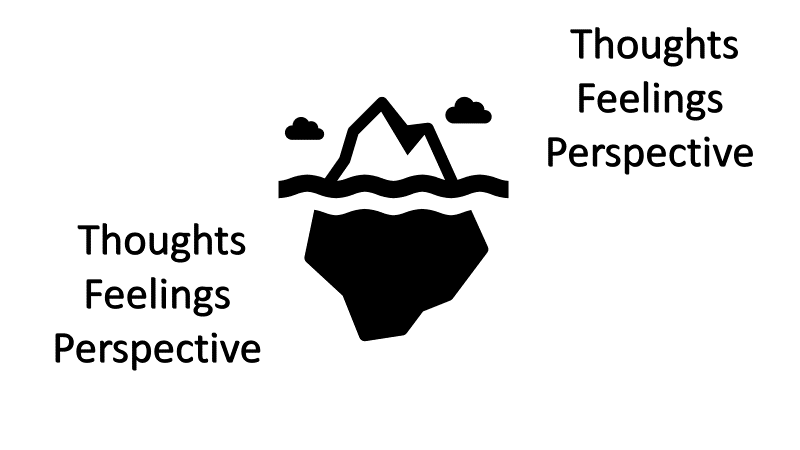
[1] Writers openly say what they think and feel in non-fiction unlike in most fiction. Therefore, they need to actively work harder to spot the implied thoughts and feelings. 


[2] A writer’s attitude towards a topic will often change in a piece of writing. They might grow to like or dislike something. Or, they may even change their perspective on things. 


[3] Unlike fiction, non-fiction texts often have many narrative threads. 


When reading a piece of fiction, you are generally building up a jigsaw of the story, but this is quite different for non-fiction because you are building up more jigsaws. What the writer thinks/feels? What is the situation the writer is in? What is the topic? These contrasting threads are hard to piece together, because there isn’t a clear narrative to hold them together. You can see how exam boards pick mostly ‘narrative’ style pieces of non-fiction to help students. At least, if there is a narrative of a boat breaking down, then a student can follow a text logically. 


Students have a problem with pinpointing things in non-fiction because of cognitive overload. Fiction usually has some clear things in it that clearly standout. We usually rely quite accurately with students to spot in a poem or a story what is interesting. That’s not so easy with non-fiction. In non-fiction there is a massive amount of cognitive overload because so much is competing for attention. A feeling in the first paragraph is of equal importance to a feeling in the second paragraph. That’s why it is so important to help students to work on reducing cognitive overload of a text. 


I am indebted to the fantastic Laura Webb and her resources for this. I’ve tweaked it a little to help model things to students. I’ve included the worksheet here. We model to students how you can take three sentences from the text to form a good idea of what is going on in the text. This one from Laura is about begging. 


First, we take three lines from the text. One from the beginning. One from the middle. One from the end. 


Source A

I come now to speak of the other class of begging impostors.

I am sure the number has not diminished since then; my impression is, that it has, on the contrary, considerably increased.  

This will give the immense sum of 7,5001. per week, or 350,0001. per year, which these persons levy on a charitable public. 


Source B

And we are using a 200-year-old law to lock up homeless addicts for begging, in some cases sending them to already overcrowded prisons.

I met a guy in Brighton who makes about a fiver a day – the most he has ever made is £30.

Luke, a homeless man I met there, a former chef, is now an addict with mental health issues. The sergeant had little sympathy.


We explore the tone. What is the tone of each line? What causes the tone? Why do you think the writer uses that tone? 


From the example, students might pick up the snobbery and disgust of the phrase ‘other class’ or the adverb 'considerably’ reflecting the writer’s fears that this problem is out of hand in the first source. Students might pick up the varying examples of pity towards beggars by making things personal with a name or how little they make in the day. 


From this, students can actually make a reasonable comparison in terms of feelings. Both texts hate something. Source A hates the beggars as he feels they are criminals. Source B hates the attitude to the police and how the judicial system treats them. We could also make a connection about pity too. Source A pities the ‘charitable’ people who give money because it is wasted. Source B pities the beggars for they have some deep seated mental health issues.  


From three lines alone, students can form clear ideas and can develop explanations around language choices. They can look at the rest of the text for ideas and technique,  but they have a starting point with non-fiction. And that is where the rub is. Students cannot tackle a whole text. They don’t do it for poetry or fiction, but yet when it comes to non-fiction they feel they need to. Half their time is spent searching for the bits to write about rather than thinking about the text. All non-fiction is seen as a block of text. We need to help them break it down. If we lighten the load a bit, the horse won’t buck and will get to where he / she needs to go. 


Thanks for reading, 


Xris 


Sunday, 27 November 2022

When I became a man, I put the ways of childhood behind me and started reading non-fiction

 ‘When I was a child, I talked like a child, I thought like a child, I reasoned like a child. When I became a man, I put the ways of childhood behind me.’

Corrithians 13:11

Fiction is the domain of childhood, freedom and creativity. From an early age, we engage with stories. In fact, our childhood is one big storytelling event. There is story time every day. There is a bedtime story. There are stories, thanks to Disney and Pixar, that can be consumed in 90 minutes, allowing parents a break. 


Non-fiction is the domain of adulthood, responsibility, duty and compliance. The older we get the more we discover that our reading comprises reading for information and process rather than enjoyment. There is the mortgage application I have to read. There are the terms and conditions I have to read about the new washing machine I have bought. There is a letter from the council about how they are spending my council tax payment I have to read. 


If we are honest, schools have a real issue with non-fiction teaching. You can just see the yawns on people’s faces when dealing with non-fiction. Can’t I teach a poem? I think some teachers would be happy to spend a week on Alcatraz than prepare students for the non-fiction paper on the exams. On previous exam specs, there was a media element so the non-fiction reading text element was downplayed as teachers explored the use of imagery, headings and subheadings.  


The problem, for me, is to do with inference. We don’t see non-fiction in the same way we see fiction and that’s down to inference. From an early age, we build students to search for inferences in fiction texts. Why is the baby bear sad? Why is Goldilocks so tired? Why are Goldilock’s parents so neglectful? We channel students into this submissive role of fiction. You know this bit here; well, it means something else. By the time students leave primary school, they know how facial actions, physical actions, objects and setting can convey a level of meaning. They can help us understand a character’s thoughts, feelings, motives, relationships,dreams and fears. Can the same be said for non-fiction? What can students do with non-fiction?


In secondary school, we had a problem with non-fiction. The preference has always been about writing it rather than reading it, so rarely has it been about exploring texts. Usually, the reading of texts has been boiled down to finding facts and opinions or treating them as literary texts and searching for techniques. We’ve never really treated them with the same level of engagement as we do fiction texts. Even the non-fiction texts selected have a whiff of literature about them and most would fit in an Ian McEwan novel. The texts usually highlight how clever the writer is.  


Inference is a factor, I think ,that is missing from non-fiction. We don’t use inference to explore non-fiction texts. In fact, there is a lack of understanding behind non-fiction texts. They are purely seen in literal terms. They are not seen in terms of subtext, nuance and hidden meaning. Instead, they are read through literal glasses. Find fact 1. Good. Now, find fact 2. 


The problem with non-fiction is like real life. A person can say one thing and mean something entirely different. That dual meaning in non-fiction is what some of the best students pick up on and the weaker students totally miss. Students need to make inferences yet we don’t place inference at the forefront of non-fiction. 


For years, I have found the way we teach the writing of non-fiction dull, uninspiring and flat. That is largely the way that we view it in terms of ‘literal writing’. We don’t coach it in terms of building meaning with the use of hints, clues and suggestions of something else. We’ve become more focused on using a rhetorical device that sounds like an infection of the genitals than building meaning. Getting students to think purposefully behind non-fiction writing is key. Them being in the driver’s seat. Them understanding that they should imply meaning. That they should build inferences consciously and subconsciously through their writing. Creative writing is all about inference and non-fiction writing should be too. 


So, how can we start building students to make inferences in non-fiction? For a start, show them how inferences can be built. 


I like to show how subtly changes can shift the whole meaning. These are from the opening sentence of a letter. What is each one trying to suggest? How do they suggest it? 


[1] I am angry that you didn’t invite me to the party. 


[2] I am disappointed that you chose not to invite me to the party.


[3] Words cannot describe how I feel about not being invited to the party.  


I love talking about the difference between ‘angry’ and ‘disappointed’ and what they convey. I also like how the accusing ‘you chose’ holds a lot of blame and how the third one removes the other person entirely. 


Another task I use is to use a real example. What can we infer from each line about his mother’s cooking? 


This is not an occasional occurrence, a once-in-a-while hiccup in a busy mother’s day. 


My mother burns the toast as surely as the sun rises each morning. 


In fact, I doubt if she has ever made a round of toast in her life that failed to fill the kitchen with plumes of throat-catching smoke. 


Toast – Nigel Slater (autobiography) 


Hopefully, they will pick up some of these things. 


This is not an occasional occurrence, a once-in-a-while hiccup in a busy mother’s day. 

I am not surprised that my mother burnt the toast. 


My mother burns the toast as surely as the sun rises each morning. 

My mother always burns the toast. 


In fact, I doubt if she has ever made a round of toast in her life that failed to fill the kitchen with plumes of throat-catching smoke. 

My mother is a terrible cook. 


Toast – Nigel Slater (autobiography) 


The great thing about this little extract is there is another inference we can make which kind of contradicts what is being said: he clearly loves his mother deeply. The fact that this text works on several levels. Understanding the multiple levels is key. Focus on a literal sense and this is a text showing how bad she is as a mother. 


We can, and should, get students to build inferences into their non-fiction writing. Here is one I do it. I give the students a loose framework to work with and get them to focus on creating the inference rather than obsess on the writing style. 


NEWS REPORT – Teacher’s Mug Stolen 


The police arrived at the scene.  [They were not worried about the event] 


The headteacher refused to comment. [They thought the whole thing was silly] 


The stolen mug was blue.  [The mug wasn’t valuable but it meant a lot to the teacher]  


Like the Toast example, the language is being used to convey meaning beyond the literal meaning. We could say things like ‘The police added the crime to the bottom of their very long list of things to do that week’. All too often students would explicitly say something like the sentences in red. They’d happily build inferences around  a complex backstory in a short story yet in non-fiction it is all about stating everything. 


Inference is the bridge between most aspects in English. For me, it is a key component in all that we do. In reading, we are looking for inferences about content, characters, the reader and the writer. In writing, we are building inferences so people see them if they look carefully enough.  


Non-fiction needs to be viewed in the same way as we view fiction. It isn’t a separate thing with separate rules and approaches. It is the same. You need to make inferences in both types of text; we just need students to understand that. 


Thanks for reading, 


Xris 


Sunday, 15 March 2020

I shot the counterargument but I didn’t shoot the argument


At the moment, I have been marking some Paper 2 mocks and the whole process is making me revise how we teach non-fiction. To be honest, I find the teaching of non-fiction really interesting. Throw a paper aeroplane out of a window – disinfect it first – and you are guaranteed to it someone with an idea about how to write a story. Do the same thing for non-fiction and you’ll get nothing.


In fairness, we teach non-fiction writing terribly. We’ll enthuse about creative writing to the extent that we will bring in sand and pebbles from the beach into lessons, just so our cherubs can find the right adjective to describe a beach. We might even play sounds of the ocean and blow in their faces so they can just get the experience right. Coffee breath and all! We might even allow Derek to eat his tuna sandwich during the lesson, because it is atmosphere building. Trish has opened all the windows to ensure the right temperature. Sharon has stolen a salt cellar and started flinging it in people’s faces. Trevor has taken it upon himself to make various bird noises until it draws the attention of SLT.


The problem with non-fiction is that we throw ideas at them. We teach students that non-fiction is about ideas and hundreds of them. That’s why when students write non-fiction they throw every idea at us. Why is smoking bad? Six paragraphs later and the students have listed four billion reasons why smoking is bad. Yes, you could teach them about Pathos / Ethos / Logos - but still they have listed a billion reasons, just with added emotion.


The problem comes with forming an argument. We tell students to list their ideas. We tell them to think of the opposite arguments. We get them to expand, list and build up arguments. We don’t get them to select, pick and identify the best argument. We don’t get them to select the one reason that is the best. That’s why non-fiction writing tends to follow the structure of:

Paragraph 1  - reason 1

Paragraph 2 – reason 2

Paragraph 3 – reason 3

Paragraph 4 – reason 4

Paragraph 5 – reason 5

Paragraph 6 – reason 6


Now, if you get students to think of opposing argument or counterargument, then you get a for argument paragraph and then an against argument paragraph. We need a cohesive argument across the whole text and that usually is achieved by building the whole piece around one reason. That reason is then developed and explored and strengthened not watered down.


Take a question from a few years ago. Parents are too overprotective. What is the one argument above all that will address this argument?


Let’s say we agree that our main argument should be:

Childhood should be about freedom and children should be carefree.

That one idea can then be a starting point. That way we can then start building up an argument rather than trying to link several disparate idea – which is what most students do.


Yes, you can go all Pathos, Ethos and Logos on me, but I’d prefer it if students look at that one argument and exploring it further. Here’s a great opportunity for classroom discussion. List as many questions about the argument.

Why should people have freedom?

What does freedom mean?

What are the benefits of children rather than adults having freedom?

Why do some people think children shouldn’t have freedom?

What does freedom look like?

Should children have complete freedom?

Does a child’s view of freedom differ to that of a parent’s?

What does a carefree child look like?  

What if I didn’t have freedom?

Why should children be carefree?    

Is my view of freedom different to others?

Do I have freedom?

Did I have freedom when I was younger?


Then, students see if they can answer some of the questions in pairs. The questions all have a natural cohesion because they all link to the same argument, but they are different facets of it.


From that point, it is easy to build and structure a coherent and cohesive argument.

Introduction: Do I have freedom?

Point 1: What does freedom mean?

Point 2: Did I have freedom when I was younger?

Point 3:  Does a child’s view of freedom differ to that of a parent’s?

Conclusion: What are the benefits of children rather than adults having freedom?


You have a stage at which you can move points and build a complete argument. You have the bones to build an argument. At this stage, you could decide that you could probably zoom on one strand and repeat the process again. I’d be tempted to go with ‘What are the benefits of children rather than adults having freedom?.   

Then, students can build up the writing and add to their framework.  If we look closer, we can see that the students are naturally demonstrating different skills and building on the one argument.


Introduction: Do I have freedom?  - Speculative writing

Point 1: What does freedom mean?- define and explain

Point 2: Did I have freedom when I was younger? – anecdotal writing

Point 3:  Does a child’s view of freedom differ to that of a parent’s? – comparative writing  

Conclusion: What are the benefits of children rather than adults having freedom? – opinion


At this point, you could bring in the heavy guns. Decide when to introduce Pathos / Ethos / Logos into the party.


How does anybody deal with an idea? I sit on it – like an egg – and wait for it to hatch. That’s what we don’t do enough with writing. We search for hundreds of eggs and then pick the best ones. Ideas need cultivating, growing, tending, caring. We don’t need hundreds of eggs. Just one. One.

Let’s get students away from listing and get them exploring one idea. Talk, of course, is brilliant for this. You don’t even need a salt cellar, a tuna sandwich, a pebble and sand to do it. It is all in their heads. Oh, and Trevor can make those bird noises in his head.


Thanks for reading. 

Xris 

Next: Sentence Hacks for Paper 2 Q5 

Sunday, 9 June 2019

Diet GCSE English Language or GCSE English Language Zero


The problem we have with GCSE, which I think Ofsted has cottoned on to, is that it is all too easy to tippex out the acronym GCSE on the exam papers and serve it up to KS3 students. Look at us, we are challenging the students. The exam board did this and gave us ‘KS3 friendly’ exam papers, which were watered down GCSE papers. As a result of this, some students are going to be beaten over head with the structure question for six whole years. How is the text structured to interest the reader? More like, how is the curriculum structured to interest the teacher (I mean the student)?

Those evil little exam questions and texts worm their way through KS3 and taint everything. They are questions to test the learning at the end of the teaching. Not at the beginning and the middle. They are not the curriculum and all too often they are the curriculum planners. The GCSEs are the end point. The time when, in theory, the knowledge and skills come to fruition.      

The problem comes when shifting to GCSE work from KS3. The time when you pointedly say numerous times that you are doing GCSE work now. You probably go all out and write GCSE several times on a PowerPoint slide - just so they get the idea that this is really, really, really GCSE work. Oh, and you adopt a serious tone to your speech.

This year I tried something with Year 9s and I am finding it quite useful for teachers and the department. I wanted students to get used to the reading demands of the GCSE exam papers from an early start, but at the same time I wanted to see what the students needed to focus on for Year 10 and Year 11. So, I decided to use the GCSE exam extracts in a multiple choice format. Instead of just giving students the GCSE questions or being kind and just giving students two of the four reading questions, I gave students the texts and thirty or so questions to work with. I wanted to analyse and view the skills and understanding students had.

The writing element of the GCSE questions is problematic and it can discourage students. A student can have a good understanding of the text, but if their writing isn’t good enough, then we’ll not see that level of understanding in their answers. Using MCQ allows me to separate the writing and the reading elements, which can help to motivate students when they see that they have understood the text and they understand that their writing is just the thing holding them back.

The process was pretty simple. The students did the test. Then, they marked each other’s test. Using a grid, they could see the areas of weakness. The beauty of the grid was it contained answers so it avoided the teacher reading out the answers one question at a time. There was no marking for the teacher, but lots of information. Information on word knowledge, summary skills, analysis etc. We then provided students with a PLC and tips on how to improve those key areas. Included on the sheet was the average mark for each area for the year group. Students then could see how they did in relation to others in the year.

The great thing about this process is that as a ‘step up’ to GCSE this was relatively easy and useful. It has been so effective that I am using it with our current Year 10s before they do a mock on Paper 2. They are going to do the MCQ test and then they’ll work through the real questions with an understanding where they might fall down with the reading skills and good understanding of the texts.   

 I have included the test and the resources used. This is based on November 2017 English Language Paper 2. The test is not perfect, but it is a starting point for us. I am still in the early stages of MCQ usage and, like all things, in time I’ll get better at them.

Test
Marking sheet for the test  

Thanks for reading,

Xris 

Saturday, 26 October 2013

Cohesion: AQA Unit 1 English Language Exam Question 2

As I have told my friends this week, I have achieved the leftie equivalent of achieving a Blue Peter badge. I was featured in an article on the Guardian website. For years I have read the paper and never once did I think I would be included in it in some form. But, as I read the article again for the fifteenth time I started to look at the webpage in more detail. It just so happens that I was thinking about blogging about the second question on the AQA Unit 1 English Language paper. The one about pictures and their use in an article or text. My blog about question one is here.

The thing I found funny was the fact that my name was under a picture of a stock photo of a random class. Anybody could easily assume it was me in the picture. I am sure some of my old school friends on Facebook will think I have changed. They will think I have ‘beefed-up’ or I have let myself go – after all, isn’t that one purpose of Facebook: to watch the rest of humanity age at a faster rate than you. Look at Tom; he has no hair. I even joked that I now have a teaching stunt double. Except: nobody is going to confuse the two of us together.  I have bigger muscles.

Anyway, I quite like the second question on the exam paper as it all about cohesion. Previous exam papers I have taught lead students to comment on the font or the type of paper used and this has caused me endless headaches as students search for a whiff of relevant meaning. For example: the writer has used a simple font because they wanted to make the text simple. It made writing about non-fiction so endlessly puerile. It was searching for something that wasn’t there. Often, writers present things in a way because the designer of the article presented it that way. Maybe, I should have taught students to write: ‘The writer didn’t have a choice about the style of font, but I am sure the designer of the article did’.  

The exam paper asks students the following question:

Explain how the headline and picture are effective and how they link to the text.

The problem with this question is the way that students automatically break a task down. They automatically assume that first you should write about the headline. Then you should write about the picture and finally you should write about how they all link to the text. 
 
For me, the whole question is about glue. What sticks everything together? What are the connections between the different aspects? Miss the glue and you miss the whole point of the question. Some people might call it glue: others call it cohesion. It was only while teaching A-Level that I came across this term for something that we tend to neglect in other aspects of school.  It is the cohesion between headline, picture and text that is important with this question.  Also, the cohesion between the reader, writer (designer-if you want to be picky) and the text needs to be explored.


Therefore our students need to comment on the:
·         Reader
·         Writer
·         Headline
·         Text
·         Picture

Sadly, the mark scheme for this question is a helpful as an ice cube tray in the desert. It should really read:

7- 8 marks – Fancy handwriting
5-6 marks -  Joined up handwriting
3-4 marks – Handwriting that has a circle or a love heart over the i’s.  

1-2 marks – Handwriting that doesn’t sit on the line

Mark schemes are aimed at examiners, and not teachers, but they could be written in a style that at least conveys some meaning. I laugh at the use of the word ‘perceptive’ in the one for this question as it has so many meanings, depending on the context. Perceptive can meaning anything, but what we need to know is what is perceptive in an examiner’s eyes.


What might we teach?


While teaching these, I would constantly refer to the reader, writer and text in discussions.

The Headline

·         Annotate a headline in isolation and identify the techniques used.

·         Explore the different possible word choices. What other words could they have used? Why did they not use ‘inventive’ or ‘forward-thinking’ instead of ‘creative’ in the Guardian article?

·         Question the purpose of the headline. What is it designed to do? Does it suggest the tone, perspective of the text?

·         Predict what the rest of the article might say. What would they include in the article?

·         Give students isolated quotes from the text and they have to identify how the two are linked. Do they support each other or do they contradict each other? Or, do they do something else?

·         Give students a selection of pictures and they have to justify which picture is the best one to go with the headline.

·         Before looking at the text, tell them the story and get them to create a headline. I did this once with Plebgate and produced some fantastic responses. The students have left now, but I think it would be great for them to re-evaluate those headline in light of recent developments.

·         Rewrite the headline for a different perspective or audience.


The Picture

·         Give students the picture and another one that is slightly similar. They discuss why one was picked over the other.

·         Get students to find an alternative picture that does the same job, or a picture that changes the perspective or angle of the article.

·         Think about symbols. Take a selection of pictures and ask students what they each one symbolises. Look at the picture from the article and comment on what it symbolises. Then, explore the text and think how it might symbolise something else in the text.

·         Get students to label the picture with quotes from the text. Limit the quotes to three or four words long so they are precise with their selections.

·         Get students to use drama to explore the reasons behind the choices here. See this blog about how I used this successfully.

·         Zoom in on one aspect and explore that one choice. Why have the teacher wear the colour blue? Why have a male teacher?

·         Ask the simple questions: What does the picture show us? What doesn’t it show us?

·         What would make this picture better?

·         Discuss the strengths and weaknesses of the picture.


The Text

·         Get students to storyboard the article. What picture would they use for each paragraph? Then, decide why this one picture was chosen above their choices.

·         Highlight the text according to bits that support or contradict the picture.

·         Pick a quote for a caption with the picture. Which quote is the best one?

·         Track the thread of the argument by highlighting the different points or reasons.


The Whole Thing

·         Summarise the whole text and work out what each section (text / picture /headline) contributes.

·         Draw arrows showing links between the different aspects. The picture shows the reality. The headline raises the question and the text reinforces the reality.  

·         Rejig the order of the headline, picture and text. What would the reader’s reaction be if the picture was at the end?

·         Work out the order the text will be read in and track a reader’s thoughts. At first I was…. Then I felt …. By the end, I was ….
 

Going back to the infamous picture in the Guardian article, there is a contradiction in the text. The article is about creative approaches to questioning, yet the picture provided doesn’t demonstrate a very ‘creative’ approach to questioning. The one boy sticking a sheet of paper up instead of a hand is only thing creative I can spot. But, it does contradict, in a way, the section that refers to picking students at random. That is the problem with pictures: they are only part of the story. The picture looks like the teacher is picking students according to who knows the answer.  Maybe the picture was chosen because there are three male teachers describing their ideas. Maybe the picture was chosen because it is a classroom. Maybe the picture was chosen because it shows the act of teaching and a very traditional mode of teaching which the article is offering alternatives.

What the exam seems to be looking for are developed explanations about cohesion with a dash of evaluation. For your really bright students, maybe they need to highlight the flaws, inconsistencies, track the structure and the reader’s reactions and explore alternative reasons behind the choices. What word do we get to describe all of this? Perceptive. If only examiners could be more perceptive when writing their mark schemes. Is there any wonder why we get a lot of papers remarked? Maybe if we had clearer mark schemes, then we would have less to quibble about. When you next mark something using a mark scheme, think about what picture should go with the scheme.

Thanks for reading  

Xris32

Saturday, 12 October 2013

Vagueness: AQA English Language Unit 1 Exam

I am not going to apologise for the blog this week, but I am going to be very specific; I’m going to write about one question from English Language exam. The problem with books on teaching English is that they are so vague. In fact, they are vaguer than Mr Vague Vagueness from Vague Street in the county of Vagueshire in the United States of Vagueness on the planet Vague. When you are planning a lesson on a particular question or thing, you don’t want some guff (sorry – I haven’t used that word in a while, but I liked it in that sentence) about what non-fiction means to society. You also don’t want a ‘funny’ quote from Dickens about how non-fiction can topple governments. What you want is some ideas to spark the germ of an idea. Hopefully, this will inspire you and I may even go through the other questions at a later date.

If books about English teaching are vague, then mark schemes for English exams are even vaguer. Step forward question one on the reading and producing non-fiction texts.  

The Question:  What do we learn/understand  about  …..?  

What do students have to show evidence of in their answer?

·         Quotes  or evidence woven into ideas

·         Subtext or what is suggested or implied in the writing

·         Summarising of points rather than repeating points

·         Key points of the article

·         Understanding the article
 

Now that is one level of answering the question. These are the standard 'bread 'n' butter' for teaching non-fiction. Do all of those things and you are not guaranteed an 8 out of 8? No, you need perceptive comments and engagement.  How do you show engagement in a text? Look Mr Examiner, when they read this article, they did a little dance. Surely, that is lively engagement and not just engagement. 


Perceptive Engagement

This is where we need to be precise with teaching skills. These are some of the things I would expect to see. Warning: they do not make a student get an automatic 7 or 8. These are some of the qualities I have seen in my students’ work.   

·         Facts and opinions

·         Awareness of various perspectives

·         Following how an argument changes in a text

·         Exploring different sides of an argument presented

·         Contradictions and inconsistencies

·         Expressing our opinion to things

·         The reader’s reaction to the text

·         Explore the relevance of the article

·         Explore what needs further explanation


There are probably more things that I have forgotten about but most of the time these things form my arsenal for preparing students for this question.

 
What activities do I do for this perceptive engagement?

 
Thankfully, hate is free in this country and one newspaper publishes its articles without charging people and these make great articles for use with this question.

 
Facts and opinions

·         Highlight an article for head (fact) and heart (opinion) phrases.

·         Work out the ratio of fact to opinion and then explore the reliability of this article based on that ratio.

·         Pick out facts and opinions and get students to categorise them.

·         Find facts and opinions blended in sentences and identify the words that create the opinions.


Perspectives

·         Drama: get students to role play being the writer and the reader. The writer explains what they are trying to do. The reader explains how they felt.

·         Explore how different readers would react to the text. How do men or women react to the text differently?

·         Describe the supposed reader of the text. What kind of reader would read this text?

Following how an argument changes in a text / Exploring different sides of an argument presented

·         Number the different points or reasons in the text. Then, rank the effectiveness or significance of each one.

·         Cut up an article into the different sides.

Contradictions and inconsistencies

·         Take a paragraph and look for what doesn’t add up. What doesn’t make sense?

·         Get students to think of questions that need answering for you to be fully convinced by the text.

·         Take a pen and draw arrows linking different parts of the text. Look to see how ideas are threaded through a text. The more connections they make, the more likely they will see the contradictions. It says here and here that this is true but in the last paragraph they say the opposites.

·         Take a pen and draw arrows and look for opposite ideas.

·         Put this article on trial. Create a team for prosecution and a team for defence.  The writer is going to be charged for libel. The class defend or prosecute the article. 


Expressing our opinions to things / Reader’s reaction to a text

·         Annotate a text with emoticons (if trendy) or emotions (if traditional). Discuss how we / the reader felt when reading the whole article.

·         Explore how our feelings are different at the end of the first paragraph and at the end of the last paragraph.

·         Drama: get students to role-play being the reader and explain how they felt when reading the article. At first I was afraid, I was petrified- I kept thinking he….

·         Teach students to use adverbs or adjectives in the analysis - Shockingly, the writer shows us how English books can be quite vague. 


I did try finding a funny quote by Dickens about non-fiction, but it was a little vague.  If you need more inspiration for Unit 1 stuff check this great blog out.


Thanks for reading  

Xris32